Mel is a personal book tracker that lives entirely on your device. Search Google Books, Open Library, and Hardcover to find any title, mark what you've read or want to read, rate books in 0.25-star increments, and write reviews that appear as initials only to protect your privacy.
The Discover tab learns from what you've read and loved — recommending similar titles as your library grows. Badges reward reading milestones: first book, 10 books, 50 books, a full year of reading. Set your own annual goals and watch the progress bar fill.
My Stats goes deep — pages per day, pages per month, books read year over year, and your average days to finish a book. Completely free, no ads, no subscriptions. Your library stays on your device — nothing is ever sold or shared.
Enrique is a screen-time tool, not a content app — it turns the moment a child unlocks their phone into a quick, curriculum-aligned question they have to answer (or skip, within a daily limit) before the phone unlocks fully.
Questions are calibrated to feel achievable, not frustrating, and pulled from public-domain sources — NAEP released test items, structured Wikidata facts, and algorithmically generated math problems — never scraped content or unreviewed AI-generated questions.
Like everything we build: completely free, no ads, no subscriptions. Crash logs stay on-device; nothing is sent anywhere unless a parent manually submits a problem report.
Math · Grade 4

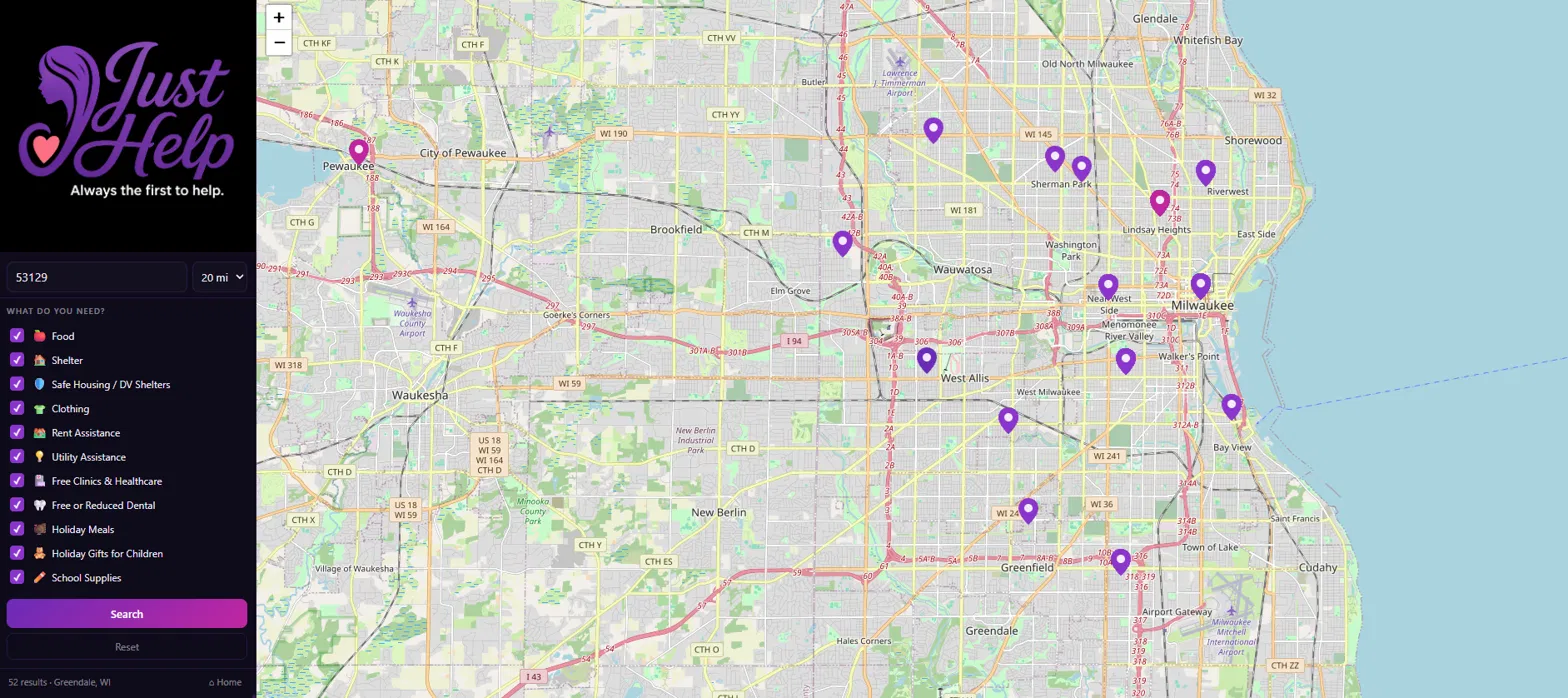
Just Help is a national locator for people who need help — and have no idea where to start. Food pantries. Emergency shelters. Free clothing. Rent and utility assistance. Holiday toy giveaways and Thanksgiving meal programs. One app, one zip code, every resource nearby.
What makes Just Help different: we crawl and aggregate data from the Salvation Army, St. Vincent de Paul, Community Action Agencies, Feeding America, Toys for Tots, the USDA, HUD, and dozens more — so results aren't filtered by Google's SEO algorithm. The small church running a Tuesday food pantry shows up the same as the national chain. Users can report outdated listings and every record goes through editorial review before going live.
Just Help also exposes a free public API so local government agencies, county social services, and community organizations can pull this data directly into their own websites. Free to use, no ads, no data collected — ever.
Still in active development — some features may not work correctly yet.
Bonnie's Pantry is a free kitchen companion designed for the way real families actually cook — where you open the fridge and have no idea what's in it, buy a second jar of peanut butter because you couldn't remember if you had one, or give up on meal planning because you don't know where to start.
The app works across four connected modules. Inventory lets you track everything in your kitchen — search from a database of over a million grocery products, set quantities and units, and always know what you have. Shopping Lists build from that same catalog: check off items as you shop, and everything you buy gets added to your inventory automatically. Log what you spent at the end of the trip, and it goes into your spending history.
Recipes are matched to what you already own — ranked by the percentage of ingredients you have on hand. Missing something? Add it to your shopping list in one tap. Add it to your meal plan from the same screen. If a recipe isn't in the database, paste it in yourself and it saves to your own private collection. The Meal Planner covers the next 30 days — assign recipes to breakfast, lunch, dinner, and snack slots, or log when you're eating out with the restaurant name, meal, and cost. Over time, the Metrics dashboard shows your food spending by week, month, and year; average calorie consumption; how often you eat different food categories; and your adherence rate to dietary preferences like Keto, Whole30, Gluten-Free, and more.
Free, no ads, no subscriptions, no data collected — ever. Powered by USDA FoodData Central, TheMealDB, and Edamam nutritional data.
Still in active development — some features may not work correctly yet.
Most "this day in history" apps treat a fact as a flat trivia card. Pable does one thing differently: the same daily card gets richer the more it's annotated. A dollar amount mentioned in a historical event becomes tangible the moment it's shown in today's terms.
Each day surfaces one historical event tied to today's date. Any dollar amount in the description becomes a tappable chip — tap it, and it expands in place to show the inflation-adjusted value today, no new screen required.
Built on two free, no-API-key-required data sources: Wikipedia's "On this day" feed, and a static U.S. Bureau of Labor Statistics CPI dataset for the inflation context.
Follow Development →
Running for office shouldn't require a war chest or a consultant. Party of You gives grassroots and independent candidates free campaign infrastructure — the tools the big parties pay for, without the price tag.
Every candidate gets a public candidate page and a full website builder with ready-made designs, plus campaign finance tracking, email outreach to supporters, ballot data and election calendars so no filing deadline sneaks up on them.
Free for candidates. No ads, and no voter data sold — ever.
Visit Party of You →

Remember when the internet was fun? Internet Rewind is a nostalgic, algorithm-free portal inspired by Prodigy, AIM, Sports Plus and the Weather Channel — built for people who miss logging on to hang out, not to doomscroll.
Interest boards and chat rooms for everything from baseball to horror movies, instant messaging with your buddy list, retro sports and news boards, a WeatherStar-style local forecast, and a game room full of classics. Our other apps show up as boards too.
No feeds, no ads, no algorithm, and your data is never sold.
Visit Internet Rewind →

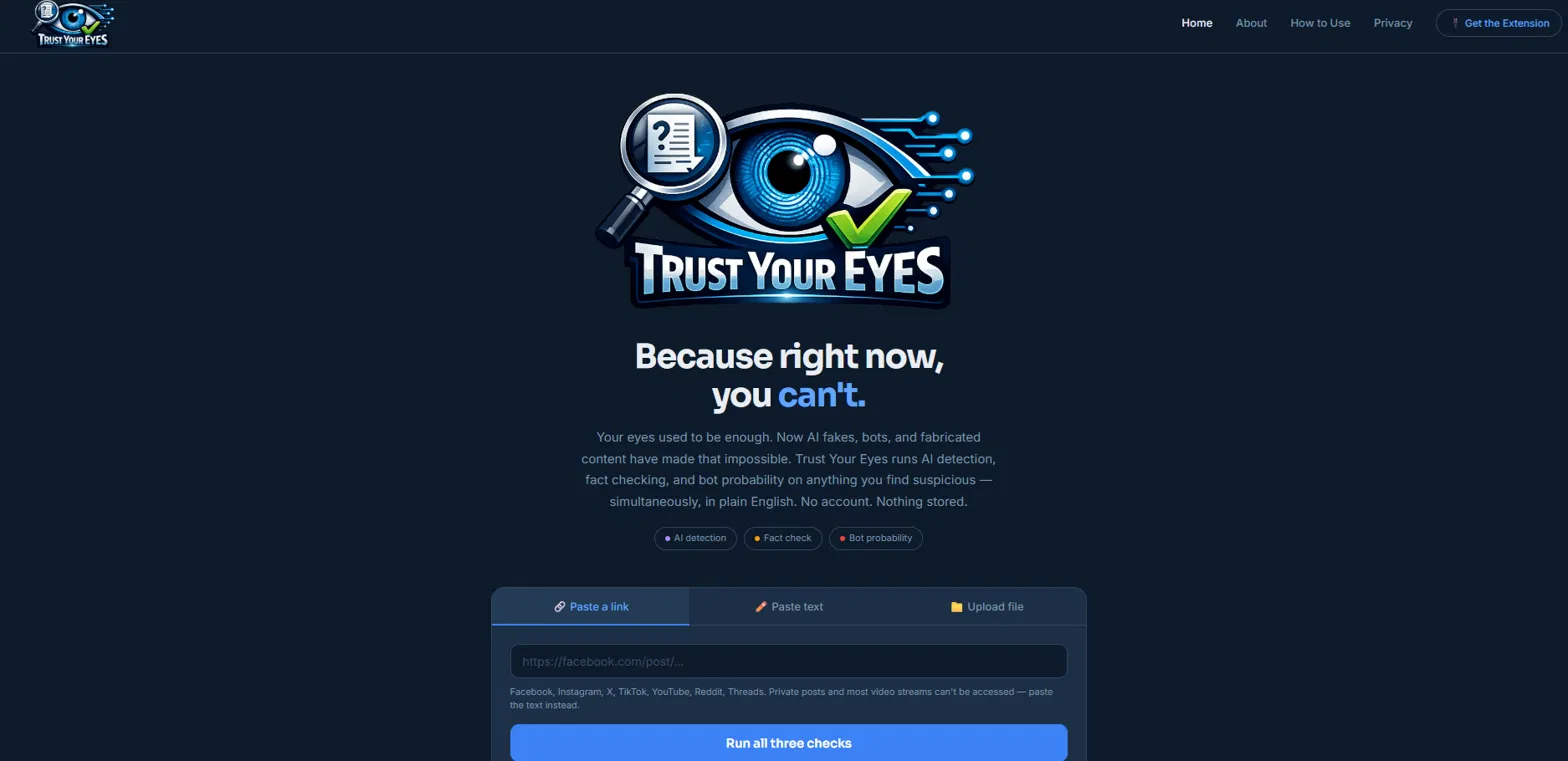
AI-generated images. Bot accounts pretending to be real people. Viral posts built on fabricated claims. They're everywhere — and they're designed to be invisible to the naked eye. Trust Your Eyes runs three simultaneous checks on any social media content you encounter: AI detection, fact verification against the Google Fact Check database, and bot probability analysis. All at once. All in plain English. Free, permanently.
The extension works on Facebook, Instagram, X, TikTok, YouTube, Threads, and Reddit. Right-click any post to check it. Nothing is stored. No account required. The check runs, the result appears, and when you move on, it's gone. The companion web app handles links, pasted text, and direct file uploads — image, audio, or screenshot — for anyone on mobile where extensions aren't available.
Still in active development — some features may not work correctly yet.

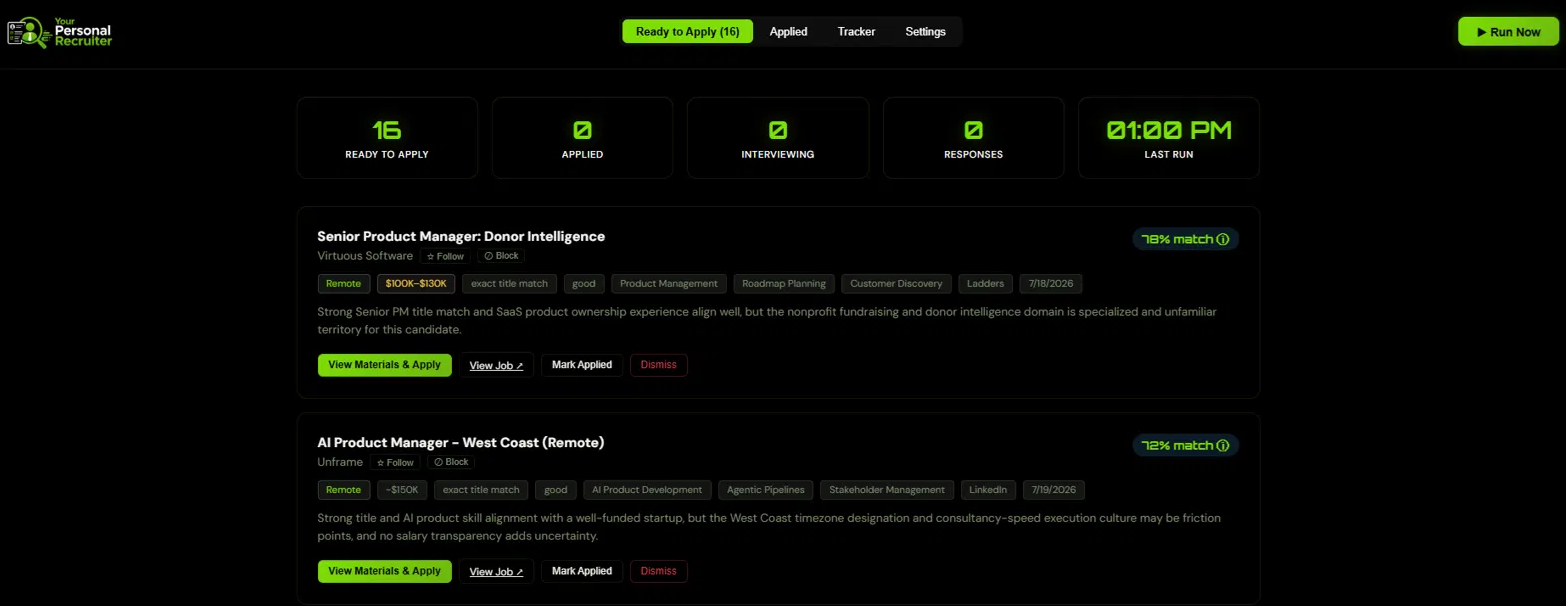
Job searching is exhausting. You're applying to dozens of positions, rewriting your resume for each one, filling out the same forms over and over — and most of the time, you never hear back. Your Personal Recruiter uses AI to do the work that burns you out: it finds job matches scored against your profile, auto-generates tailored resumes and cover letters for each application, and auto-fills application forms so you can apply in seconds instead of hours.
It keeps a running tracker of where you've applied, who's responded, and who you're interviewing with — so your job search stops feeling like a second job. Free to use. No account required to get started.
Still in active development — some features may not work correctly yet.

You have thousands of photos sitting on your phone that almost nobody ever sees. Picture This! turns any Android device — an old phone, a tablet, a Fire stick — into a beautiful digital photo frame that actually shows your memories.
It works over your home's LAN, so you can manage every frame from your phone: push photos, rename frames, restore from backup, and organize collections — all without a cloud account or subscription. Your phone is the source of truth. The frames are just displays. Set it up, hang it on the wall, and let your photos live somewhere they can actually be seen.
Still in active development — some features may not work correctly yet.